As the “Great Snow” or Daxue period arrives in the Chinese lunar calendar, winter’s chill intensifies, inviting reflection and nourishment. Ancient China viewed this time not just as a seasonal challenge but as an opportunity for “nourishing the hidden” or Yang Zang. This notion resonates in the Shijing or Book of Songs, an ancient collection of Chinese poetry, where it depicts:
“On the hills are the varnish trees; in the marshes are the chestnuts… You have wine and food; why not play your lutes daily?”
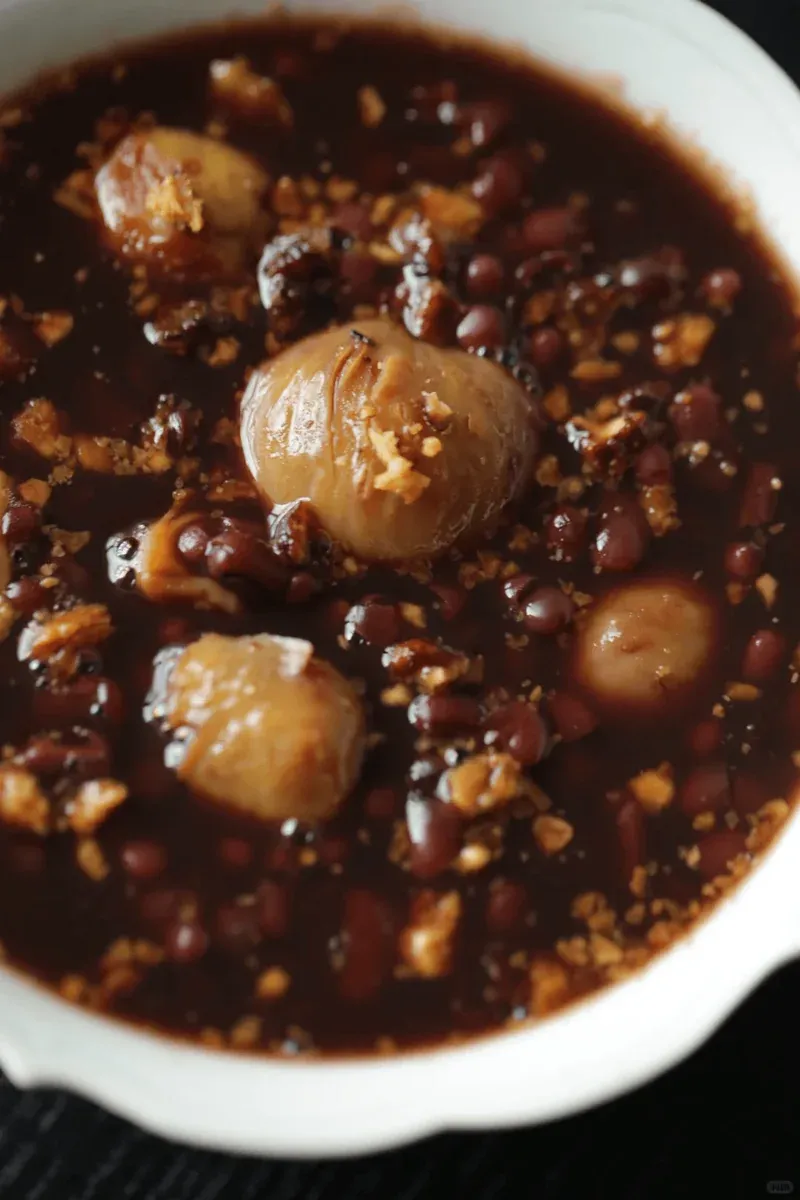
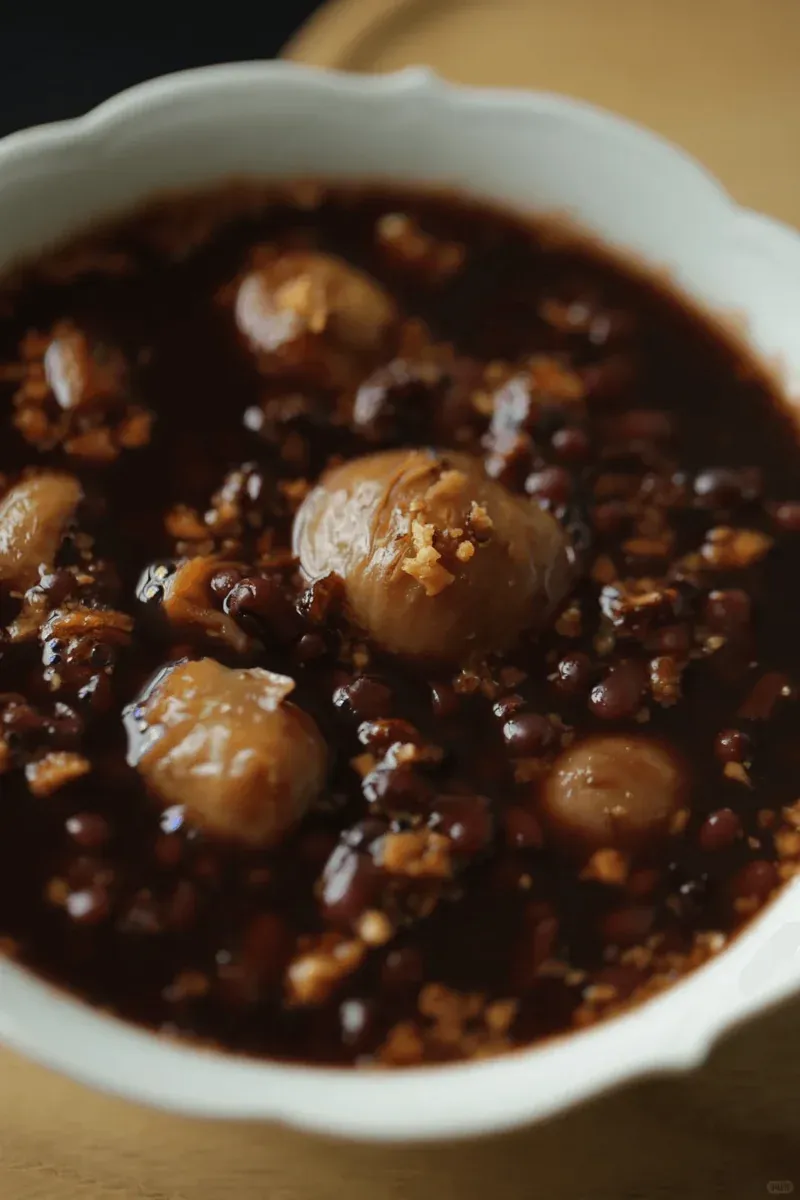
Today, we channel that age-old warmth with a comforting bowl of Chestnut and Adzuki Bean Soup. Known as a “Healing Tonic” (Shidian), this soup is crafted to invigorate the spleen, support kidney health, and lift winter spirits.
📋 Ingredients: Essentials for Winter Wellbeing
- 8-10 Wild Conical Chestnuts (Zhuili): Revered as “The King of Nuts” in China, these chestnuts are smaller, sweeter, and more aromatic than their common counterparts.
- 1/2 cup Adzuki Beans (Chixiaodou): Opt for the slim variety esteemed in Traditional Chinese Medicine for its detoxifying properties.
- 1 Whole Walnut Kernel: Toasted and crushed to offer beneficial fats for brain health.
- A sprinkle of Black Sesame Seeds: Adds minerals and a rich, nutty fragrance.
- Yellow Rock Sugar: Adjust to taste. Preferred in China for its subtle sweetness.
🔪 Instructions: The Deliberate Dance of Slow Cooking
Step 1: Preparing the Protective Beans
Soak the Adzuki beans in cold water for 30 to 60 minutes. Boil them in a slow cooker or a sturdy pot for 2 to 3 hours until they soften, turning the broth a rich, earthy red.
- Cultural Insight: Historically, red beans were believed to ward off evil and attract good fortune (Qu Yi Ying Xiang).
Step 2: Crafting the Walnut Garnish
Peel the raw walnut if possible, then sauté with a touch of brown sugar until aromatic and caramelized. Add black sesame seeds and set aside.
Step 3: Infusing the Flavors
Combine the shelled chestnuts and yellow rock sugar with the pre-cooked Adzuki bean soup. Simmer for an additional 20 minutes until the chestnuts are tender and infused with sweetness.
Step 4: The Finishing Flourish
Serve the hot soup in a bowl, topped with the prepared walnut crumble. Savor slowly during a cold evening.
💡 The Sage’s Secrets
To appreciate the unique qualities of this soup, we turn to the revered texts of Chinese medicine:
1. The Chestnut: Guardian of the Spleen
The Bencao Gangmu (Compendium of Materia Medica) describes chestnuts as “salty and warm, non-toxic,” promoting “Qi” in the stomach and kidneys. They are said to fortify the body, especially beneficial for those experiencing joint or lower back discomfort in cold weather.
2. The Adzuki Bean: A Natural Cleanser
Praised in the Shennong Bencao Jing (The Divine Farmer’s Herbology Classic) for its ability to “clear heat and dissipate swelling,” Adzuki beans are renowned for reducing water retention (edema).
- A Word of Caution: Ancient wisdom advises against excessive consumption due to their potent “fluid-draining” properties, which can cause dry skin if not balanced with other nourishing foods.
💡 Expert Observations
- Embrace the “Solar Term” Lifestyle: The concept of 24 Solar Terms (Er-Shi-Si Jie-Qi) is a unique angle to approach food as a natural rhythm, enhancing niche authority.
- Synergy of Superfoods: Highlighting the pairing of Chestnuts (Complex Carbs) and Adzuki Beans (Protein/Fiber) taps into “Healthy Eating” and “Superfood” interests.
- Authenticity Matters: Emphasizing the use of Yellow Rock Sugar distinguishes your recipe from common “sugar-water” versions, giving it an authentic “Old Shanghai” or “Traditional Cantonese” essence.
🧪 Nutritional Insights (Per Serving)
- Calories: Approximately 175 kcal
- Protein: 6g
- Fiber: 9g (Excellent for winter digestion)
- Micronutrients: Rich in Manganese, Magnesium, and Potassium.
- TCM Property: Warming and Strengthening.