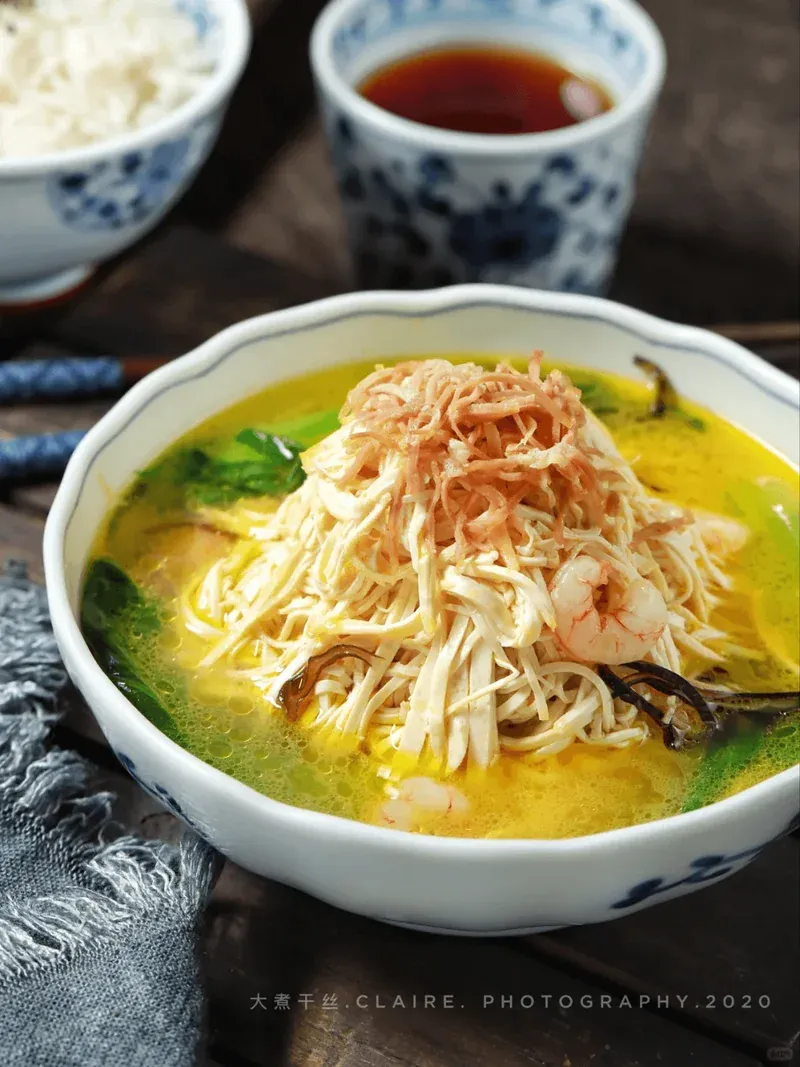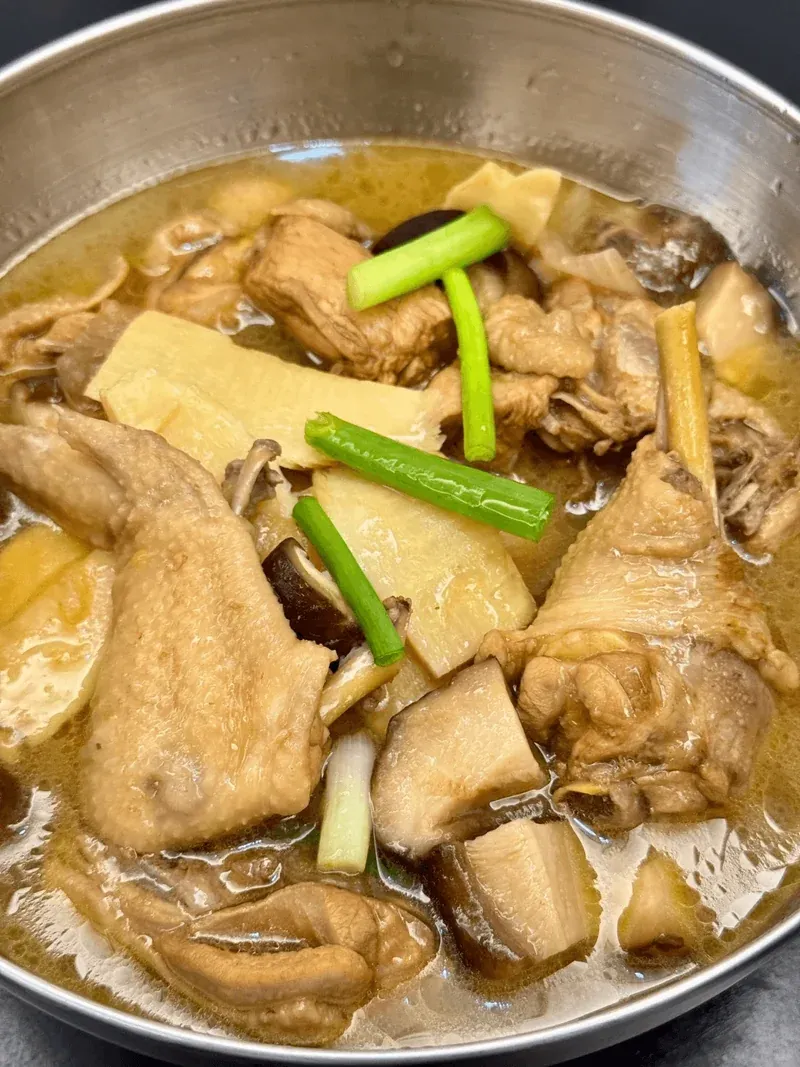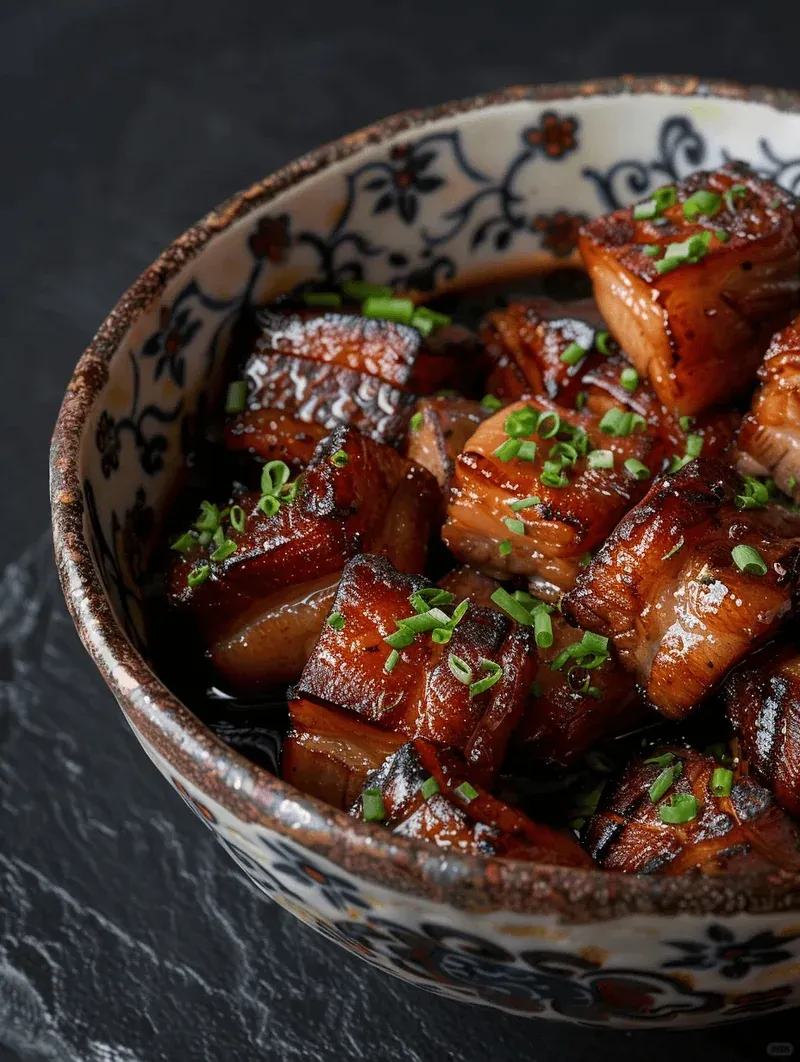
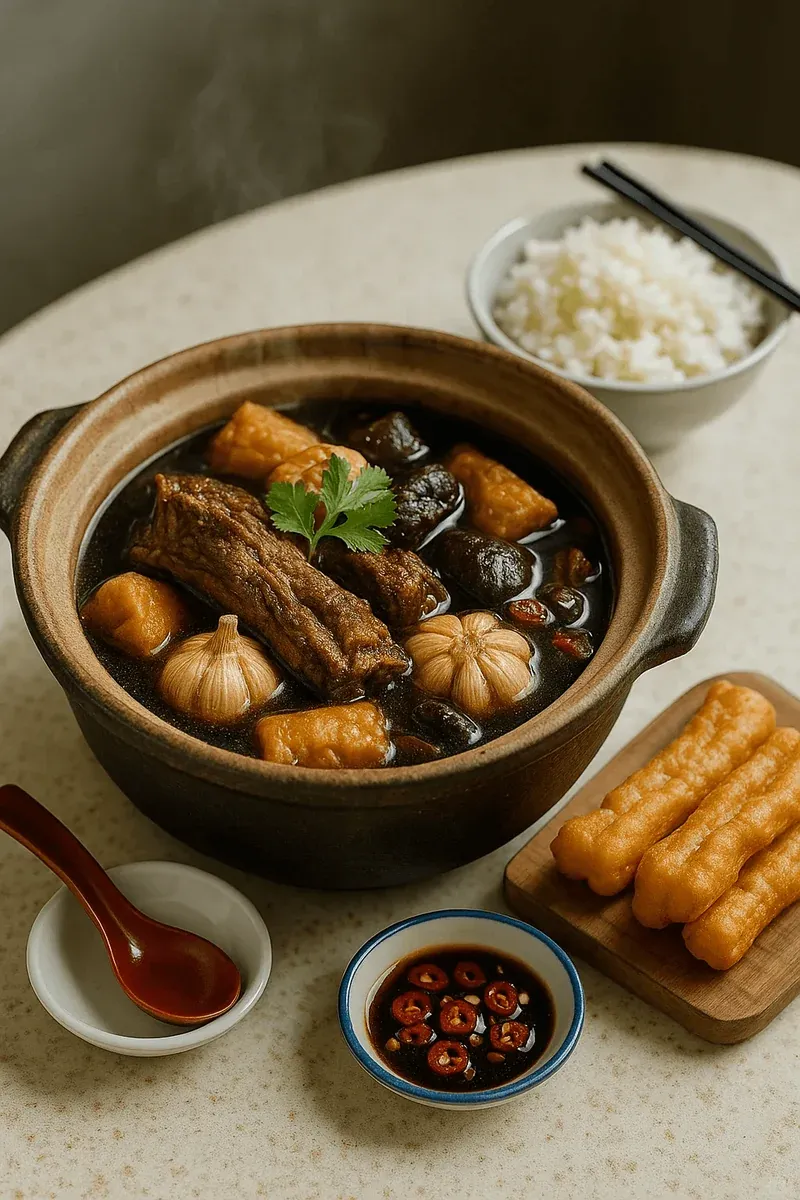
Bak Kut Teh, often misleadingly translated as “Meat Bone Tea,” is a comforting, aromatic pork rib soup rooted in the traditions of the Hokkien immigrants in Klang, Malaysia. Despite its name, tea leaves are not part of this dish. Instead, it is a medley of herbs and spices that create a rich, dark broth, which has become a beloved staple worldwide. This dish, originally a nourishing tonic for laborers, now represents a culinary heritage that captures the heart of Klang cuisine.
📋 Essential Ingredients
A. The Core Proteins
- 1.2 kg Pork Spare Ribs: Cut into segments for even cooking.
- 600g Pork Belly: Whole for braising, ensuring a succulent texture.
- 600g Pork Trotter/Hock (Optional): Adds body and richness to the broth.
- 120g Dried Shiitake Mushrooms: Rehydrated in warm water, with some of the mushroom water reserved.
- 180g Whole Garlic Bulbs: Retain the skin for enhanced flavor.
- 200g Fried Bean Curd Puffs (Tau Pok): Absorb the flavorful broth.
- 150g Dried Bean Curd Skins (Fuzhu): Prepared by soaking and draining.
B. The Herbal Symphony
- 10g Angelica Sinensis (Dang Gui): For its grounding aroma and health benefits.
- 12g Codonopsis (Dang Shen): Offers a sweet undertone.
- 12g Solomon’s Seal (Yu Zhu): Known for its balancing properties.
- 6g Szechuan Lovage (Chuan Xiong): Supports cardiovascular health.
- 8g Rehmannia (Shu Di Huang): Imparts a distinctive dark hue.
- 4g Cinnamon Stick & 3g Dried Tangerine Peel: Provide warmth and citrusy brightness.
- 8g Goji Berries: Stir in at the end for a touch of sweetness. (Alternatively, opt for a 50-60g store-bought Bak Kut Teh spice mix for a quick option.)
C. Flavor Foundations
- 3 Liters Fresh Water + Reserved Mushroom Water.
- 40ml Light Soy Sauce & 20ml Dark Soy Sauce.
- 10ml Sweet Soy Sauce: Enhances the soup’s depth.
- 18g Rock Sugar: Balances the soup’s flavor profile.
- 12-16g Sea Salt: Adjust according to taste.
🔪 Cooking Steps
Step 1: Blanching Process
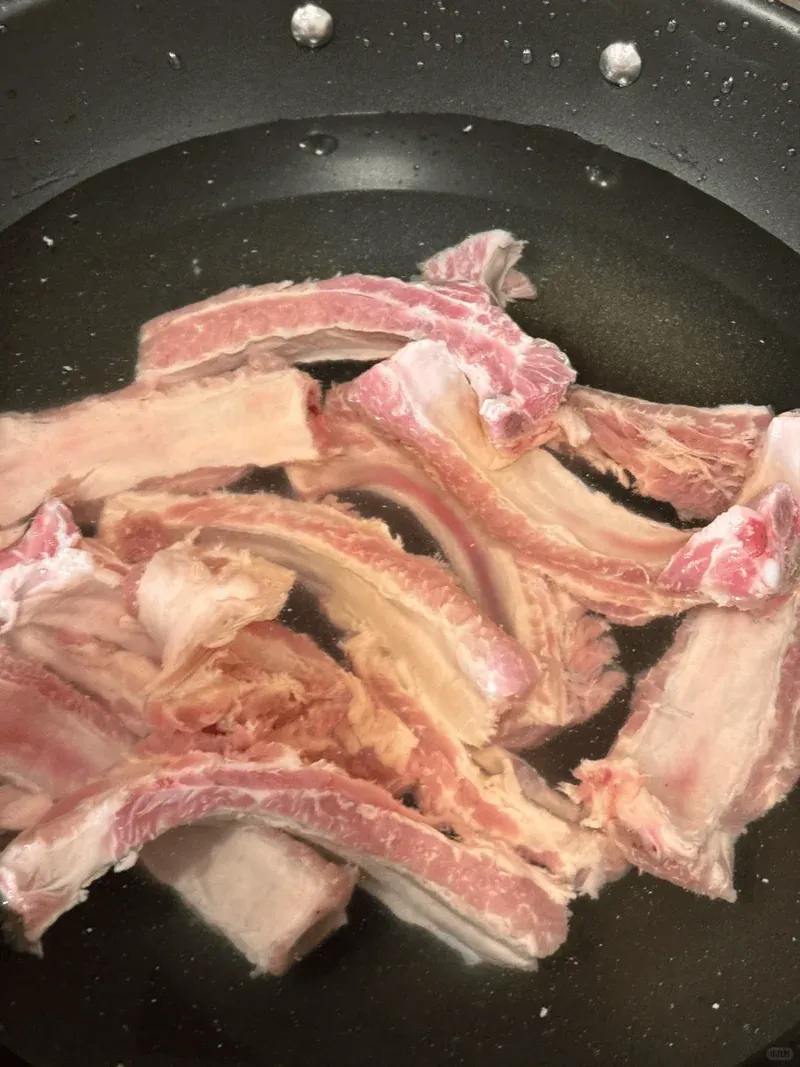
Submerge the spare ribs, pork belly, and trotters in a pot of cold water. Bring to a boil for several minutes to cleanse impurities. Rinse the meat thoroughly under cold water.
Step 2: Herbal Infusion
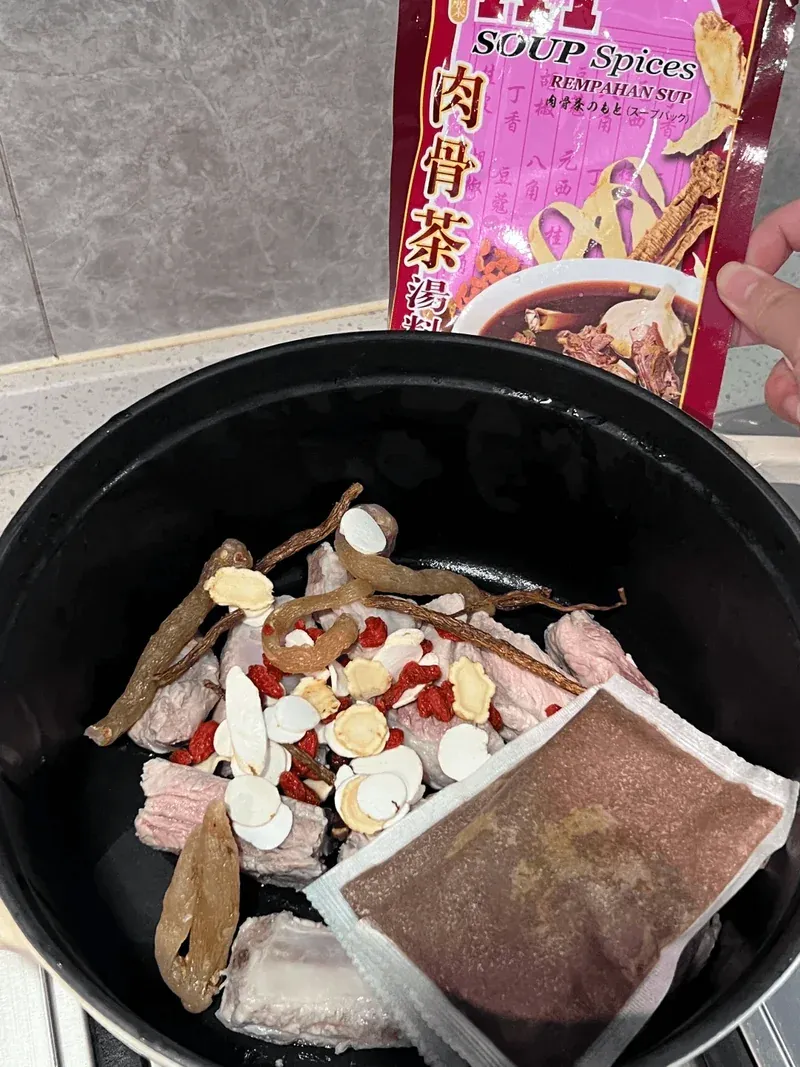
Using a sturdy soup pot, combine fresh water, mushroom water, the herbal bag (excluding goji berries), and garlic bulbs. Boil, then simmer for about 25 minutes, allowing the herbs to release their full potential.
Step 3: Slow Cooking
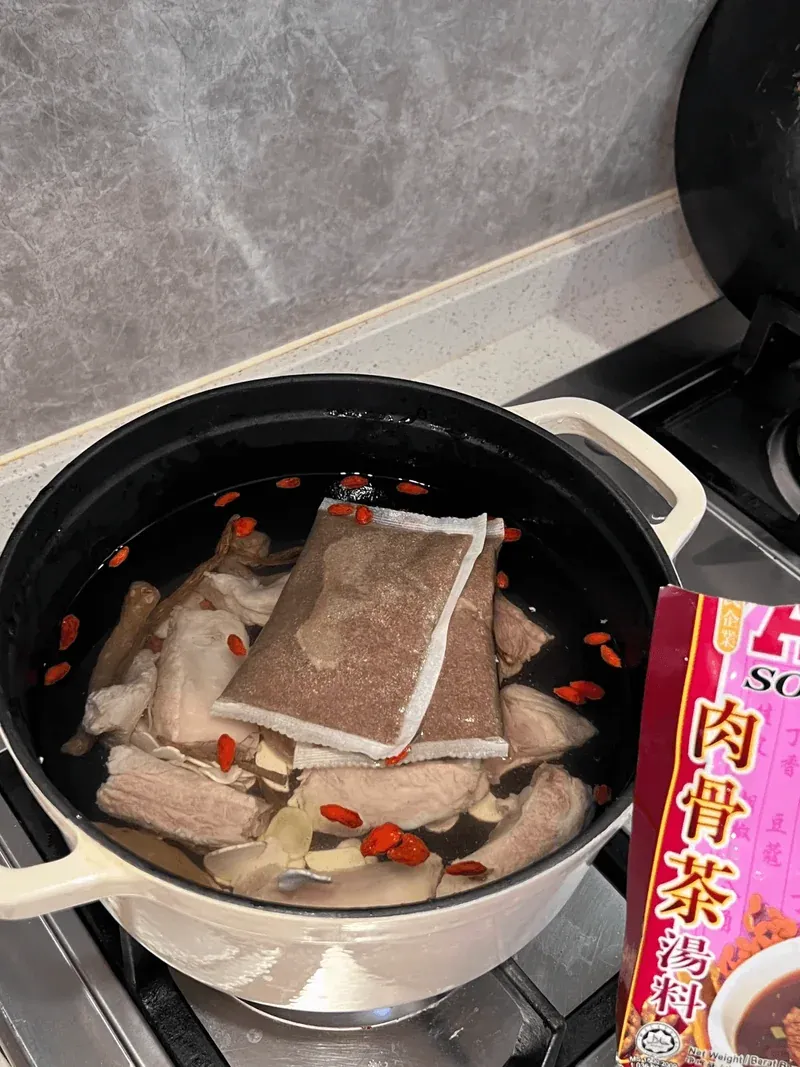
- Introduce the blanched meats, mushrooms, soy sauces, and rock sugar to the herbal infusion.
- Maintain a low simmer for about an hour, skimming off any foam or fat.
- Season with salt gradually. Add bean curd puffs and skins, simmering briefly so they soak up flavors.
- In the final moments, add goji berries, then let the soup rest, allowing flavors to meld.
Step 4: Serving Suggestions
Slice the pork belly and return it to the pot. Serve the dish in clay bowls, ensuring each portion is generously covered with soup.
🥢 Embracing Tradition
For an authentic experience, serve the soup with:
- Fried Dough Crullers (You Tiao): Dip in the broth for added texture.
- Chili-Garlic Soy Dip: A fiery accompaniment made with bird’s eye chilies.
- Accompanying Tea: Traditionally paired with strong tea like Oolong, which aids digestion.
💡 Cultural Insights
- Traditional Chinese Medicine (TCM) Influence: Ingredients like Dang Gui and Dang Shen highlight the dish’s health benefits, appealing to those interested in functional foods.
- Klang vs. Singapore: The herbal richness of Klang contrasts with the peppery Singaporean version, attracting diverse culinary interests.
- Slicing Technique: Slicing pork post-braise locks in moisture, ensuring tender meat.
🧪 Nutritional Overview
- Calories: Approximately 420 kcal
- Protein: 35g
- Net Carbs: 8g
- Health Benefits: Supports joint health (collagen) and boasts anti-inflammatory properties.