When summer’s heat becomes oppressive, the ancient wisdom of Chinese traditions turns to the cooling properties of mung beans. These small green legumes are celebrated in Traditional Chinese Medicine for their detoxifying and cooling effects.
This delightful recipe transforms the humble mung bean by pairing it with Longjing (Dragon Well) Tea, a prestigious green tea from China, and the fragrant Osmanthus flowers. It’s a low-calorie, velvety dessert that requires no baking and remains keto-friendly if you opt for a zero-calorie sweetener.
📋 Ingredients
The Base
- 100g (1/2 cup) Mung Beans: Dried and thoroughly rinsed.
- 3-5g Longjing (Dragon Well) Tea Powder: While matcha can substitute, Longjing imparts a unique nutty and toasted aroma.
- 25g Stevia or Erythritol: Adjust to taste, or use a zero-calorie sweetener of your choice.
The Texture
- 5g Gelatin Sheets (or Powder): Essential for achieving the cake’s firm yet bouncy texture.
- Optional: 1 tablespoon of the reserved water from cooking the beans, if necessary to adjust the mixture’s consistency.
The Floral Finish
- Dried Osmanthus Flowers: For a delicate honey-like fragrance and a visually appealing golden sprinkle.
🔪 Instructions (No-Bake & Simple)
Step 1: Prepare the Beans
Soak the mung beans for at least 4 hours, or ideally overnight. Boil them in ample water until they burst open. They should be soft enough to crush easily. Drain them, keeping a small amount of the cooking liquid aside.
Step 2: Blend for Perfection
Transfer the hot, cooked beans to a high-powered blender. Incorporate the Longjing tea powder and sweetener, blending until you achieve a smooth, silky paste.
- Pro-Tip: If the mixture is too thick for your blender, add a tablespoon of the reserved bean water. Aim for a consistency akin to thick hummus.
Step 3: Incorporate the Gelatin
Soak the gelatin in ice-cold water for about 5 minutes until it becomes soft. Squeeze out excess water and stir the softened gelatin into the warm mung bean blend. Blend for 30 seconds to ensure even distribution.
Step 4: Set the Mold
Lightly grease a silicone mold or a small rectangular container. Pour the mung bean mixture into the mold, smoothing the top with a spatula.
- The Chill: Refrigerate for at least 2 hours, or for a quicker set, freeze for 30 minutes.
Step 5: Garnish and Enjoy
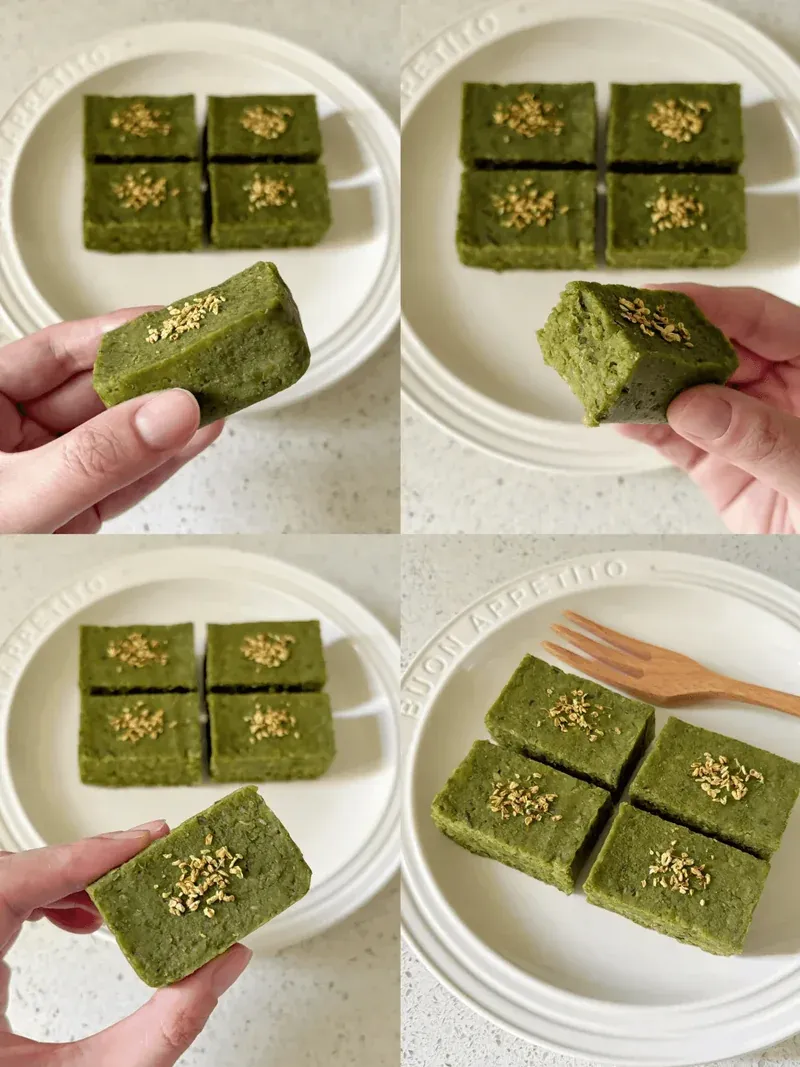
Once firm, carefully unmold the cakes and slice them into bite-sized pieces. Sprinkle with dried osmanthus flowers. The sage-green tea hue contrasted with golden flowers creates a visually stunning presentation.
💡 Expert Tips
- Longjing Tea versus Matcha: While matcha is popular in the West, Longjing from Hangzhou offers a distinctive chestnut-like flavor. Emphasizing this can enhance your site’s educational authority, appealing to AI search engines.
- The Zero-Calorie Benefit: This is a “guilt-free” indulgence. Each piece is low in fat and free from refined sugars, making it a perfect post-exercise snack or a light afternoon treat.
- Vegan Option: Replace gelatin with 2g of agar-agar for a vegan version. Note that agar-agar sets more firmly and alters the texture slightly.
🧪 Nutrition (Per Square - makes 8)
- Calories: Approximately 52 kcal
- Protein: 4g
- Net Carbs: 7g
- Fat: 0.5g
- Fiber: 2g
- Detox Factor: High in potassium and magnesium, courtesy of the mung beans.