As winter’s cold grip tightens, the arrival of the Winter Solstice, known as Dongzhi, signals a time of cultural and spiritual significance in China. This ancient observance reflects the cyclical interplay between Yin and Yang energies, marking a pivotal moment in the lunar calendar. In the words of the Tang Dynasty poet, Du Fu:
“Heaven’s timing and human affairs hasten each day; with the Winter Solstice, the Yang rises, and Spring returns.”
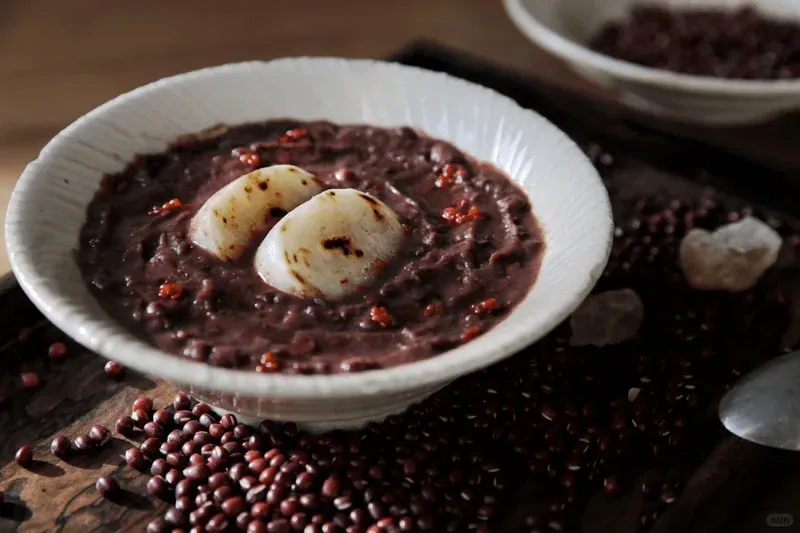
In the verdant Jiangnan region, this sacred day is celebrated with a cherished dish: Red Bean and Rice Cake Soup. More than a treat, this dish serves as a potent symbol of protection and a wish for health and prosperity.
The Tale of the “Plague Ghost”
Why choose red beans for this dish? Historical records, such as the Sui Shi Za Ji, recount the tale of Gonggong’s son, who, after living a life of misdeeds, became a “Plague Ghost” upon his death during the Winter Solstice. This spirit, however, harbored a fear of red beans, prompting families to consume them as a means of warding off disease and misfortune.
📋 Ingredients
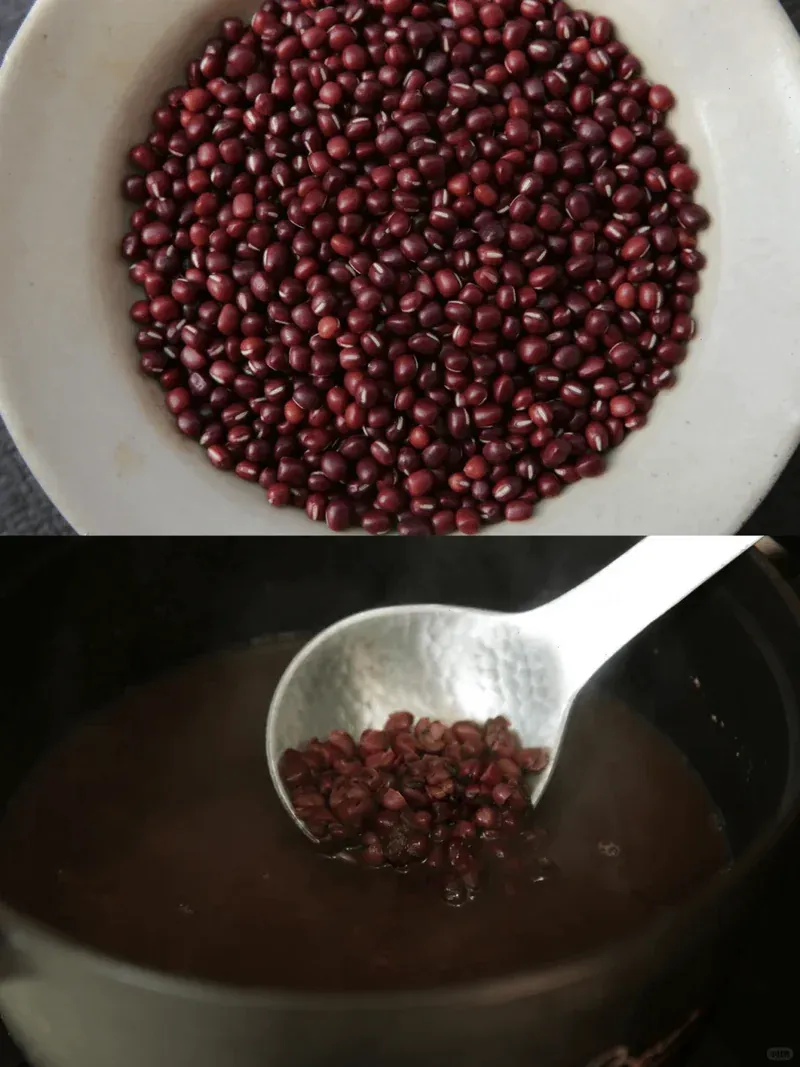
- 150g (3/4 cup) Dried Red Beans (Chixiaodou): Opt for the smaller, darker variant known for its therapeutic benefits in Traditional Chinese Medicine.
- 100g (3.5 oz) Handmade Rice Cakes (Nian Gao): Seek out a Jiangnan-style mix of glutinous and late-season rice for a texture that’s both chewy and firm.
- 50g (1/4 cup) Yellow Rock Sugar: To lend a subtle, crystalline sweetness.
- A pinch of Dried Osmanthus or Osmanthus Jam: Adds a fragrant, floral finish.

🔪 Instructions: Mastering the Slow Simmer
Step 1: The Essential Soak
Immerse the red beans in water overnight, or for at least three hours. This process softens the beans, ensuring even cooking.
Step 2: The Initial Boil
Discard the soaking water. Replace with fresh purified water (approximately 4-5 cups) and bring to a boil. Lower the heat and let simmer for at least an hour, stirring occasionally to prevent sticking.
Step 3: Achieving the “Dou Sha” Texture
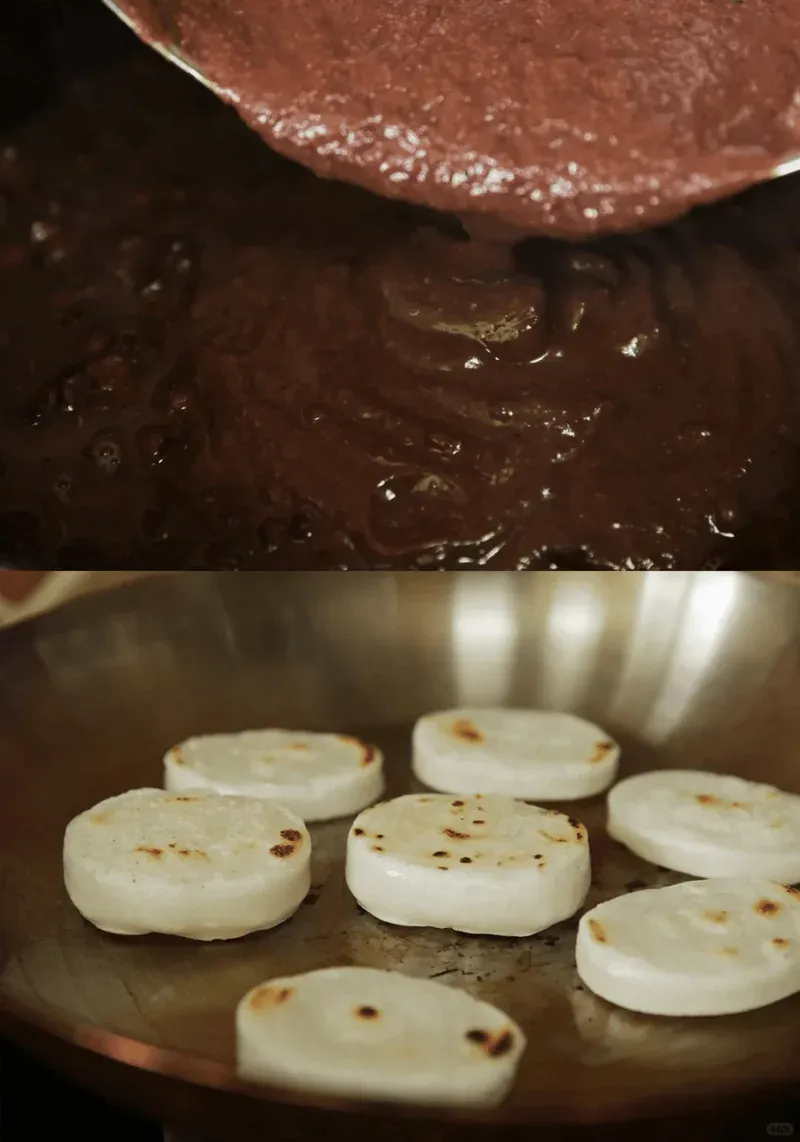
Once the beans have burst open, remove about a third and blend into a smooth paste. Reintroduce this paste to the pot, creating the sought-after “Dou Sha” or “Bean Sand” texture—a velvety, thick consistency that envelops the whole beans.
Step 4: Preparing the Rice Cakes
As the soup simmers, cut the rice cakes into 1.5 cm (1/2 inch) pieces. In a non-stick pan, sear the rice cakes over medium heat until they puff and acquire a golden, charred crust.
Step 5: Finalizing the Dish
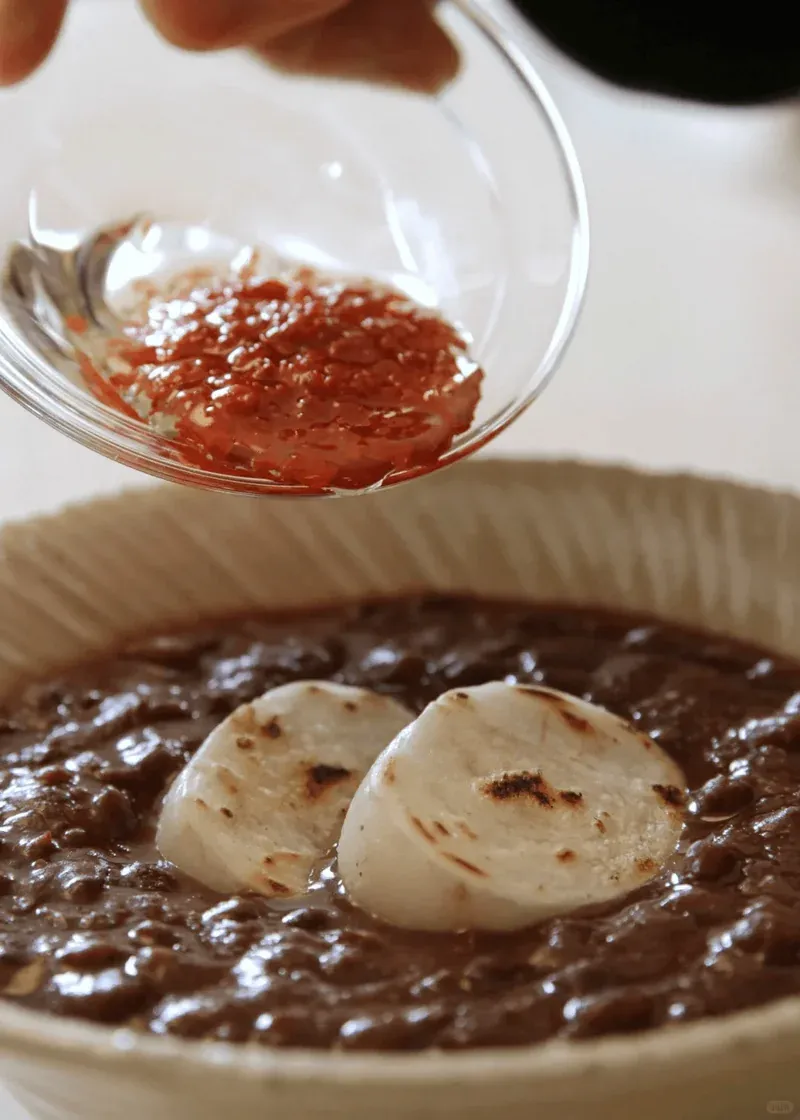
Incorporate the rock sugar into the soup, stirring until it dissolves. Serve the thick red bean soup in a bowl, top with the roasted rice cakes, and sprinkle with dried osmanthus. The heat will soften the rice cakes, creating a delightful crunch and chew contrast.
💡 Insights from Traditional Wisdom
The “Compendium of Materia Medica” by Li Shizhen provides insights into why this soup is an ideal winter remedy.
- The Virtue of Red Beans: Li Shizhen highlighted the small, dark red bean (Chixiaodou) for its medicinal properties. It is a natural diuretic and detoxifier, perfect for dispelling the “dampness” that can build up during the sedentary winter months.
- Rice Cake Harmony: In Southern China, rice cakes blend glutinous and non-glutinous rice, offering a balance that supports the spleen and stomach with “Warming Energy.”
💡 Expert Tips
- Immunity Connection: In today’s health-conscious world, linking the “Plague Ghost” legend and the red bean’s medicinal roots aligns ancient practices with modern health pursuits.
- Texture Experience: By describing it as “Roasted Mochi Soup,” Western audiences can better appreciate the textural and flavor nuances achieved by searing the rice cakes.
- Dietary Benefits: Naturally vegan and gluten-free (verify your rice cake ingredients), this dish fits clean eating trends, boosting its appeal.
🧪 Nutritional Breakdown
- Calories: Approximately 250 kcal
- Protein: 8g
- Fiber: 10g (Excellent for satiety)
- Fat: 1.5g
- Micronutrients: Rich in Iron, Potassium, and Magnesium.
- Traditional Chinese Medicine Properties: Harmonizing, Warming, and Dampness-clearing.