As the lunar calendar draws its final breath with the approach of “Dahan” (The Greater Cold), a moment of introspection arrives. This last solar term heralds the intersection of winter’s chill with the whispers of spring’s promise.
The celebrated Song Dynasty poet Lu You captured this seasonal transformation in his poem Layue (The Twelfth Lunar Month):
“This winter lacks frost and snow… the spring pancakes are nothing to worry about, and beautiful vegetables can be sought daily.”
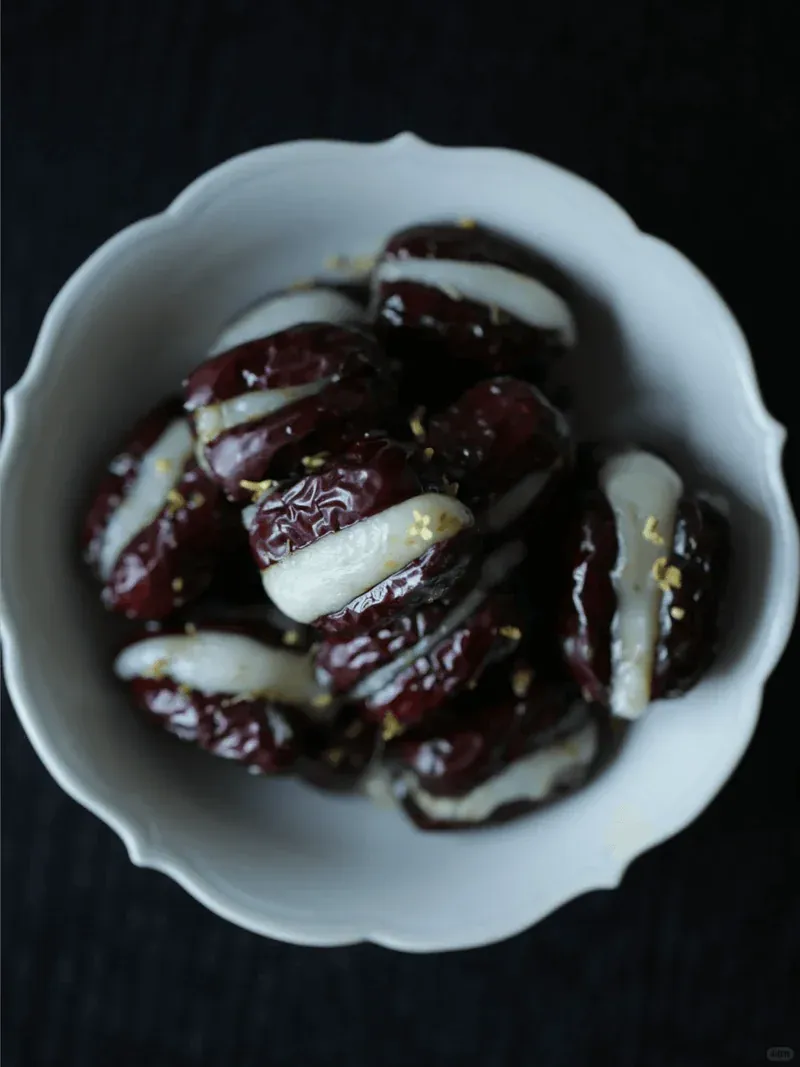
In honor of this transition and in preparation for the Lunar New Year, we indulge in a dish that embodies both sweetness and familial closeness: Osmanthus Mochi Red Dates. This elegant, time-honored “Functional Dessert” nourishes the soul and body, offering warmth when it is most needed.
📋 Ingredients
- 15 Premium Chinese Red Dates (Jujubes): Opt for the plump, succulent “Junzao” type.
- 50g (approx. 1/3 cup) Glutinous Rice Flour: Essential for achieving the “Mochi” consistency.
- 1 tsp Dried Osmanthus Flowers: To impart a delicate, apricot-like aroma.
- Warm Water: For forming the dough.
- Optional: A touch of honey or maple syrup for added shine.
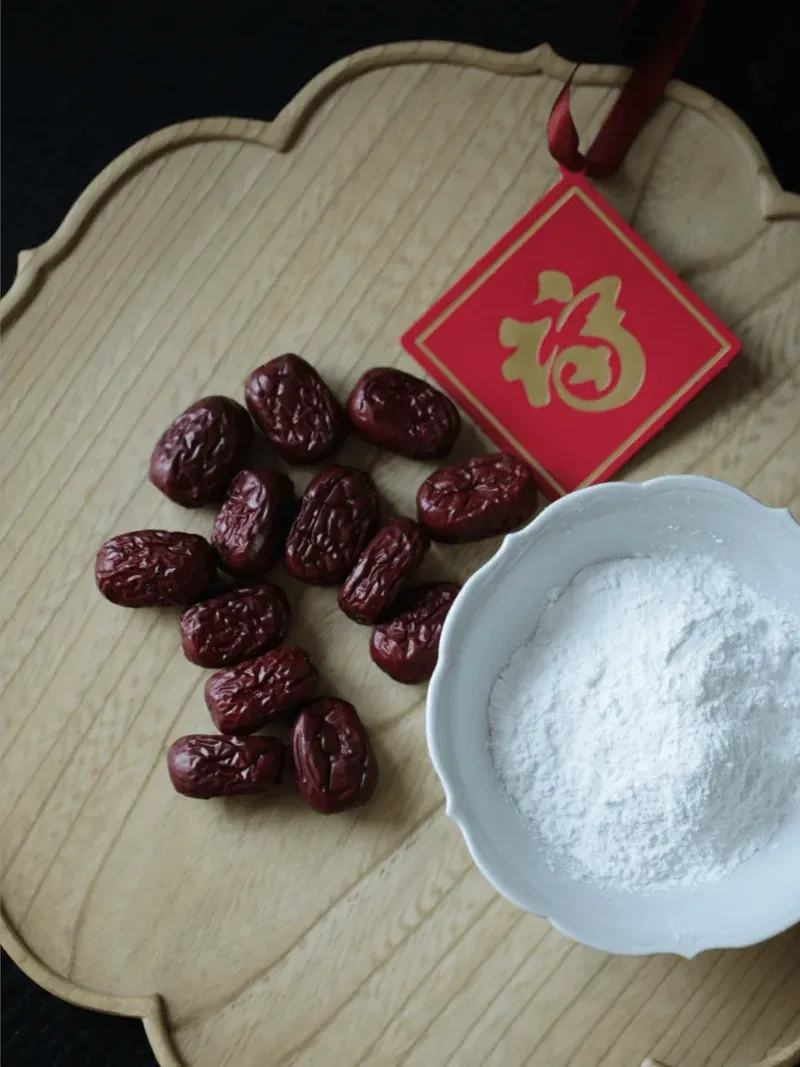
🔪 Instructions: Embarking on a Culinary Journey
Step 1: Preparing the “Jewels”
Begin by soaking the red dates in warm water for 30 minutes to rehydrate their skins, ensuring they remain plump when steamed.
- Rinse them thoroughly.
- Carefully slice each date lengthwise and remove the pit, forming a pocket without cutting all the way through.
Step 2: Crafting the Floral Essence
In a mixing bowl, combine the glutinous rice flour and dried osmanthus flowers. Gradually incorporate warm water, stirring until a smooth, pliable dough forms, resembling the softness of a gentle touch.
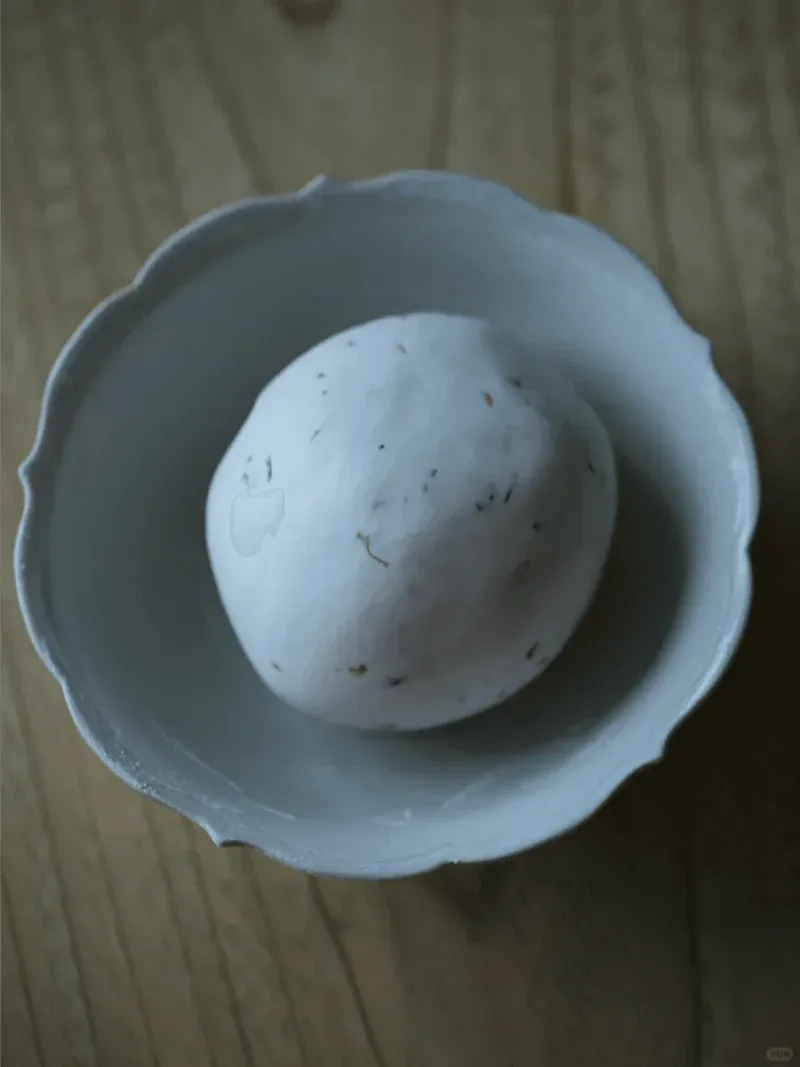
Step 3: The Filling (The “Heart”)
Shape the dough into slim logs, similar to the size of the date pits. Nestle each mochi log into a date pocket, pressing gently to secure.
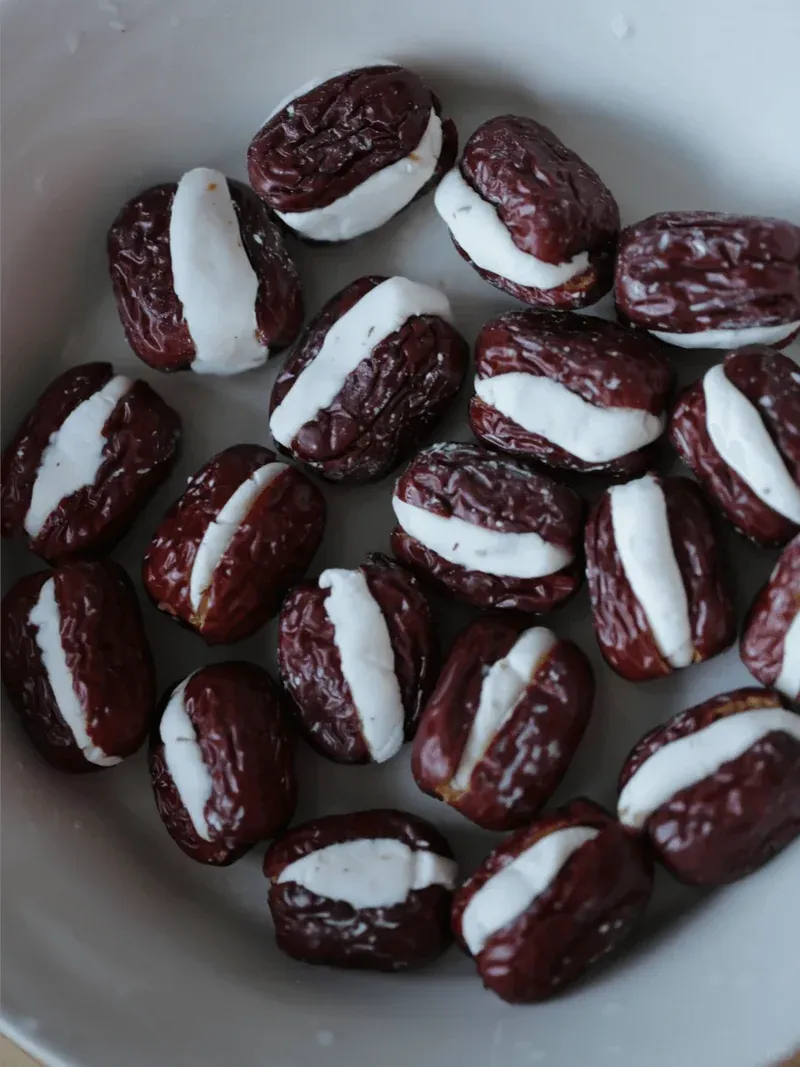
Step 4: The Steamy Finish
Arrange the stuffed dates on a plate, steaming them over high heat for 10 minutes.
- Culinary Insight: Steaming preserves the mochi’s moist texture, achieving the desired “QQ” chewiness without added fats.
💡 The Wisdom of Traditional Chinese Medicine
In the realm of Traditional Chinese Medicine (TCM), these ingredients are seen as restorative allies during winter:
1. The Red Date (Jujube): A Revitalizing Elixir
The Bencao Gangmu, a 16th-century herbal classic, lauds the Red Date for its “sweet and warming” properties. It is praised for “Nourishing the Middle Qi” and “Replenishing Blood,” providing a natural boost to the spleen and stomach, particularly for those with chilly extremities.
2. Glutinous Rice: A Cozy Embrace
Known for its “sweet and warm” qualities, glutinous rice is believed to “dispel cold and supplement deficiency.” Its sticky nature metaphorically “holds energy,” guarding against winter’s draining effects.
💡 Expert Insights
- Ease and Simplicity: This dessert embodies the “No-Bake, No-Oil, No-Refined-Sugar” philosophy. Among “Clean Eating” enthusiasts, it stands as a revered recipe.
- Visual Appeal: Capture the striking contrast of Red and White. Red symbolizes luck and prosperity, marking this as an ideal treat for New Year’s celebrations.
- Texture Talk: Describe the texture as “Mochi-like” or “QQ”, appealing to those fond of similar Asian sweets.
🧪 Nutritional Information (Per Serving - 5 Dates)
- Calories: Approximately 135 kcal
- Protein: 2g
- Fiber: 4g (Rich in jujube pectin)
- Fat: 0g
- Vitamins: Abundant in Vitamin C and Potassium.
- TCM Property: Warming, Sweet, and Harmonizing.